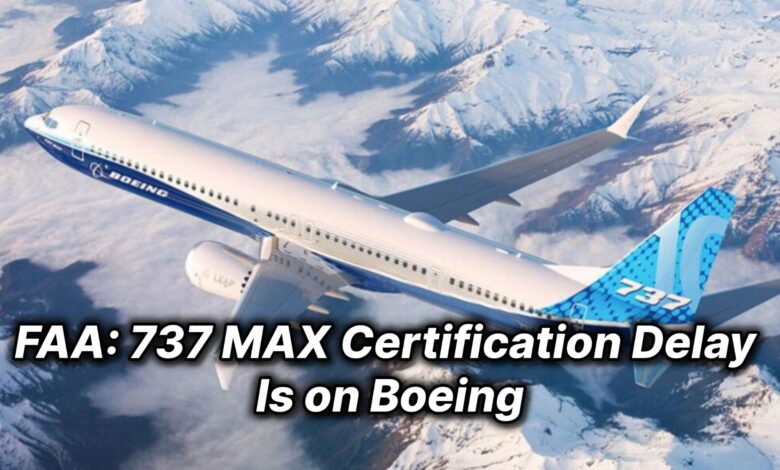
The Federal Aviation Administration stated that the delays in the certification process of the Boeing 737 MAX 7 and MAX 10 models are not caused by the authority itself but by the manufacturer.
FAA Administrator Brian Bedford said that the agency has allocated significant resources to support testing and oversight processes, but it cannot carry out the required technical work on behalf of the manufacturer. Bedford emphasized that Boeing must complete the necessary technical improvements on the aircraft and demonstrate compliance with regulations through its own efforts.
The latest delays in the certification process were linked to technical issues identified in the engines’ anti-icing systems, as well as quality control deficiencies during the production phase. Following the door plug blowout incident involving a 737 MAX 9 aircraft in early 2024, inspections revealed various manufacturing defects on approximately 50 aircraft. FAA inspections identified systematic shortcomings in production procedures and non-compliance with standards in quality control processes.
The FAA noted that some progress has recalled in the certification process of the 737 MAX 10 and that Boeing was allowed to increase its monthly 737 MAX production rate to 42 aircraft toward the end of 2025. However, the agency reiterated that the ultimate responsibility for conducting tests and ensuring full regulatory compliance rests with the manufacturer.